It happened just after 9 p.m., outside the Washington Hilton, during one of Washington’s most glittering annual traditions: the White House Correspondents Association (WHCA) dinner. As cameras flashed and celebrities mingled with journalists and lawmakers, a lone gunman opened fire near the hotel’s east entrance. One Secret Service agent was wounded. The suspect, apprehended minutes later blocks away, remains in custody. The dinner continued inside, unaware — until the abrupt evacuation.
Once again, the Washington Hilton finds itself thrust into the center of presidential history — not for a policy announcement or a gala toast, but for another act of violence tied to power, visibility, and proximity.
This isn’t the first time gunfire has echoed near this stretch of Connecticut Avenue. And just as in 1981, when President Ronald Reagan was shot steps from the same hotel, the nation is forced to confront how political spectacle and real danger intersect in the heart of the capital.
A Hotel Anchored in American Political Trauma
The Washington Hilton isn’t just a venue. It’s a landmark steeped in presidential memory. Opened in 1952, it was one of the first major hotels built in D.C. after World War II and quickly became a go-to location for high-profile events. But its legacy is shaped as much by security failures as by its ballrooms.
The March 30, 1981, assassination attempt on President Reagan remains the most defining moment in the hotel’s history. As Reagan exited through the hotel’s T Street entrance after giving a speech to AFL-CIO leaders, John Hinckley Jr. fired six shots from a .22 caliber revolver. Press Secretary James Brady was critically injured, D.C. police officer Thomas Delahanty wounded, and Secret Service agent Timothy McCarthy took a bullet protecting the president.
Reagan survived — “I forgot to duck,” he famously quipped — but the event transformed presidential security. Motorcade protocols were overhauled, Secret Service training intensified, and the idea that public appearances could be deadly for sitting presidents took root.
Now, more than four decades later, the hotel has once again become a flashpoint.
Why the WHCA Dinner Remains a Target — Intentional or Not
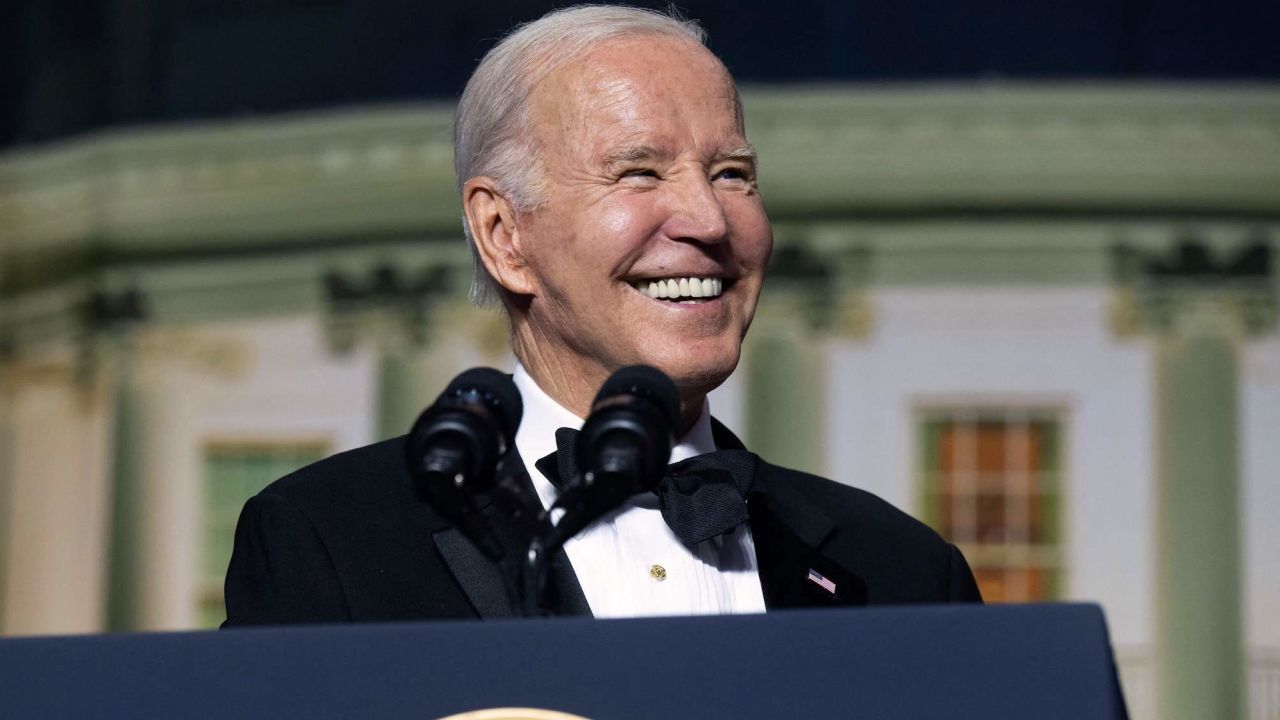
The White House Correspondents Dinner is an odd American tradition. Part roast, part fundraiser, part media-political spectacle, it draws presidents, cabinet members, journalists, Hollywood figures, and lobbyists into a single, high-visibility room. For critics, it symbolizes the cozy relationship between press and power. For organizers, it’s a celebration of First Amendment values.
But its predictability makes it vulnerable.
Despite enhanced intelligence monitoring, the event follows a recurring pattern: same city, same hotel, same timing. The WHCA has considered rotating venues, but the Washington Hilton remains the default for its size, location, and history.
Security has evolved since 1981. Today, the Secret Service, U.S. Capitol Police, and D.C. Metropolitan Police coordinate months in advance. The perimeter around the Hilton during the dinner is a layered fortress — checkpoints, counter-sniper teams, K-9 units, and mobile command centers.
Yet, the 2024 shooting suggests gaps remain.

The suspect, identified as 37-year-old Darren Voss, had no known ties to domestic terror groups. But he had a history of erratic behavior, multiple arrests for trespassing and weapons possession, and had posted anti-government rants online for years. While not on any federal watchlist at the time of the attack, his name had surfaced in local law enforcement databases.
This raises a troubling question: How do you prevent an attack by someone who isn’t flagged — yet acts with intent?
The Washington Hilton: Symbol of Access and Exposure
What makes the Washington Hilton uniquely susceptible isn’t just its location — it’s its architecture.
Unlike modern secure compounds or fortified government buildings, the Hilton was designed for flow, not defense. Its wide entrances, glass facades, and public sidewalks allow easy access — a feature now exploited by those aiming to disrupt or harm.
In the 1981 shooting, Hinckley was able to step from the curb into the motorcade’s path in seconds. This year, the suspect approached from a side alley, avoided initial screening, and fired from 25 yards away before being taken down.
The hotel’s layout hasn’t changed much. While it now hosts annual security reviews with federal agencies, it still operates as a commercial property with public event spaces. Journalists, guests, and staff come and go through multiple access points — a logistical nightmare for threat assessment.
“Having a high-profile political event in a public hotel is inherently risky,” said Rebecca Tran, a former DHS security analyst. “You can’t fully control the environment. And in a city where symbolism matters, attackers choose locations that guarantee media attention. The Hilton checks every box.”
From Reagan to Today: How Threats Have Evolved
In 1981, the threat was singular: one man with a gun and a fixation on public notoriety (Hinckley’s motive was linked to his obsession with actress Jodie Foster).
Today’s threats are more diffuse. Lone actors, often radicalized online, operate without formal networks. They’re harder to detect, their intentions masked by mental health issues or vague online posts.
The 2024 shooter left behind a manifesto-style document on a personal blog, referencing economic collapse, media manipulation, and a “corrupt bipartisan machine.” He did not name any politician directly, but referred to the WHCA dinner as “the last feast of the elite.”
This reflects a broader trend: political violence increasingly targets symbols of power — not always the leaders themselves, but the institutions and events that surround them.
In recent years, there have been at least a dozen credible threats against WHCA dinners, according to FBI disclosures. Most were vague or quickly dismissed. But the 2024 incident confirms that even low-probability threats can materialize — especially when the venue remains unchanged and highly symbolic.
Security Realities: Can the WHCA Dinner Stay at the Hilton?
The short answer: Yes — but only with fundamental changes.
Holding the dinner at the Washington Hilton offers continuity, tradition, and logistical ease. But it also creates complacency. The assumption that “it won’t happen again” is dangerous.
Experts recommend several immediate reforms:
- Rotate venues annually — moving the event between D.C., New York, and other major cities would reduce predictability and deter targeting.
- Implement biometric screening for all attendees, including journalists and celebrities, to match federal event standards.
- Restrict public access to streets and alleys around the hotel 48 hours prior, treating it as a National Special Security Event (NSSE).
- Increase undercover presence in the days leading up to the dinner to detect surveillance or rehearsal behavior.
- Partner with social media monitoring firms to flag potential threats in real time.
The WHCA has resisted major changes, citing cost and tradition. But the cost of inaction may be far higher.
What This Means for Political Events and Public Trust
This shooting, while less deadly than the 1981 attack, signals a deeper crisis: the erosion of safe political space.
From town halls to campaign rallies, public appearances by elected officials have become risk assessments rather than democratic engagements. The WHCA dinner — once a light-hearted evening of satire — now carries the weight of contingency planning and emergency drills.
Media organizations, already distrusted by large segments of the public, now face renewed scrutiny. Was hosting a lavish dinner during a time of national tension tone-deaf? Did the optics of celebrities laughing while security teams prepared for violence undermine public trust?
Possibly. But abandoning the dinner altogether isn’t the answer. Instead, it’s time to reframe it — not as a party, but as a statement of resilience.
Just as Reagan returned to work hours after being shot, the event went on after the evacuation. Comedians delivered their sets. Journalists raised glasses. The president gave a speech — brief, sober, but defiant.
That response matters. It says: We won’t be scared off.
But it must be matched by smarter planning, better intelligence, and a willingness to break tradition when lives are at stake.
The Path Forward: Tradition Meets Transformation
The Washington Hilton will likely host the WHCA dinner again next year. The pull of history is strong. But so is the imperative to adapt.
Organizers must treat the event not as a social gathering, but as a high-risk public forum. That means:
- Investing in threat modeling with federal partners
- Redesigning guest flow to minimize exposure
- Training staff in active shooter response
- Engaging mental health experts to assess potential behavioral red flags
And for the public? Understand that events like these aren’t just about access or glamour — they’re about the survival of open political culture in an age of polarization.
The Washington Hilton stands as both monument and warning. It has hosted presidents, legends, and now, twice, violence. Its doors remain open. But who walks through them — and how they’re protected — will define the next chapter of presidential history.
FAQ
Did the president attend the dinner when the shooting happened? Yes, the president was inside the ballroom and was safely evacuated to an underground secure location during the incident.
Was the suspect targeting a specific person? No clear evidence links the shooter to a specific target. His writings suggest a broad anti-establishment motive.
Has the WHCA dinner been attacked before? No physical attacks occurred at prior dinners, but multiple credible threats have been investigated in recent years.
Why does the WHCA dinner still happen at the Washington Hilton? Tradition, capacity, and logistical familiarity keep the event anchored there, despite security concerns.
Were any journalists injured in the shooting? No journalists were physically injured, though several were caught in the evacuation and experienced trauma.
Could the shooting have been prevented? Intelligence agencies are reviewing whether earlier behavioral signals were missed, but the suspect was not on a federal watchlist.
Will future dinners be held elsewhere? The WHCA has not announced any venue changes, but internal discussions about rotating locations are underway.
FAQ
What should you look for in White House Correspondents Dinner Shooting Sparks New Chapter? Focus on relevance, practical value, and how well the solution matches real user intent.
Is White House Correspondents Dinner Shooting Sparks New Chapter suitable for beginners? That depends on the workflow, but a clear step-by-step approach usually makes it easier to start.
How do you compare options around White House Correspondents Dinner Shooting Sparks New Chapter? Compare features, trust signals, limitations, pricing, and ease of implementation.
What mistakes should you avoid? Avoid generic choices, weak validation, and decisions based only on marketing claims.
What is the next best step? Shortlist the most relevant options, validate them quickly, and refine from real-world results.